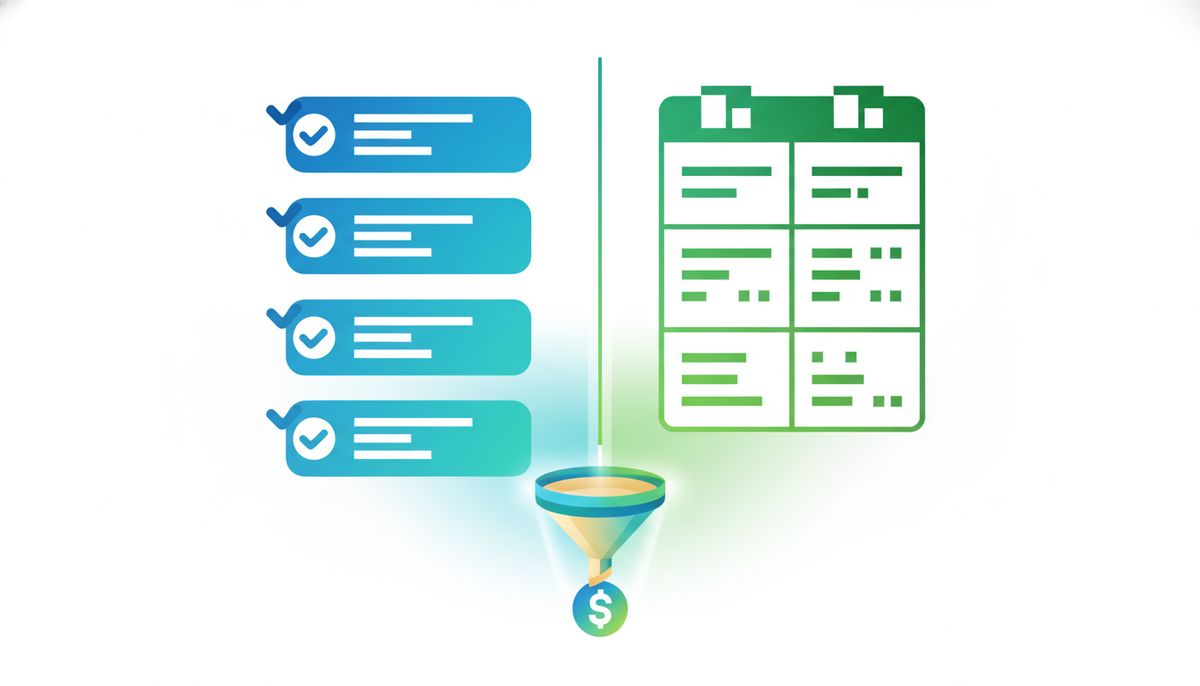
You have identified a profitable niche, selected high-potential affiliate programs, and are ready to create content. Now you face a critical decision that plagues almost every content creator: Do you write a "Top 10" listicle or a detailed "Product A vs. Product B" comparison?
Choosing the wrong format isn't just a stylistic error; it is a revenue leak. If you present a listicle to a user who is ready to buy but just needs to choose between two specific models, you force them to look elsewhere for that final confirmation. Conversely, if you offer a dense comparison to a user who is just discovering the category, they may bounce immediately because they aren't ready for that level of detail.
This guide breaks down the mechanics of both formats to help you align your content strategy with the buyer’s journey. By understanding the psychological triggers behind listicles and comparison posts, you will learn how to deploy the right format at the right time to maximize your affiliate commissions.
How do I determine which format fits my audience?
The choice between a listicle and a comparison post depends entirely on where your reader sits in the marketing funnel. Listicles are discovery tools for users asking "What are my options?", while comparison posts are decision tools for users asking "Which one fits my specific needs?".
To make this decision, you must analyze the search intent behind your target keywords.
Step 1: Decode the Buyer’s Mindset
Before writing a single word, you need to categorize the user’s intent. The format you choose dictates the user experience, and mismatching that experience with their expectations will kill your conversion rates.
The Listicle Mindset (Discovery Phase) When you write a listicle (e.g., "10 Best CRM Software for Small Business"), you are targeting top-of-funnel traffic. These readers are in the research phase. They know they have a problem and are looking for a broad range of solutions.
- User Goal: To scan options quickly and see what is available in the market.
- Your Goal: To capture high-volume traffic and get them to click through to a merchant to learn more.
- Why it works: The structured list format is visually appealing and easy to digest. It creates psychological momentum; once a reader starts scanning item #1, the numbering system encourages them to scroll down to #10.
The Comparison Mindset (Decision Phase) When you write a comparison post (e.g., "Salesforce vs. HubSpot"), you are targeting bottom-of-funnel traffic. These readers are aware of the major players and have narrowed their shortlist down to two or three candidates.
- User Goal: To validate a decision they are about to make. They want to know if Product A is better than Product B for their specific situation.
- Your Goal: To build intense trust and provide the final nudge toward a purchase.
- Why it works: According to industry analysis, 97% of consumers consult online reviews before making a purchase. A comparison post addresses this directly by contrasting features, pricing, and drawbacks side by side.
Quick Check: Look at your target keyword. If it includes "best," "top," or a number, plan a listicle. If it includes "vs," "alternative," or "review," plan a comparison.
Step 2: Analyze Engagement Metrics for Both Formats
Understanding how users interact with these pages helps you set realistic expectations for your analytics. You shouldn't judge a comparison post by the same metrics you use for a viral listicle.
Listicle Metrics Listicles generally excel at keeping readers on the page. The scannable nature of the content means users often stay to read about multiple items.
- Time on Page: Typically higher due to the volume of content.
- Click-Through Rate (CTR): Listicles naturally generate higher CTRs because they offer multiple "exit points" (affiliate links). If a user doesn't like Option 1, they might click Option 2.
- Volume: These posts usually attract higher traffic volumes because the keywords are broader.
Comparison Metrics Comparison posts often see lower time-on-page if the user finds their answer quickly ("Product A is cheaper"), but the quality of the visitor is significantly higher.
- Conversion Rate: While they generate fewer clicks total, the clicks they do generate are "qualified." A user reading a comparison is often credit card in hand.
- Bounce Rate: You might see higher bounce rates if you answer the user's question immediately in the introduction (which isn't necessarily bad for the user, but bad for ad revenue).
Actionable Insight: Use heat mapping tools to see where users click. In listicles, you will often find that the top three positions get the vast majority of engagement. In comparisons, users often click the "Winner" button or the pricing table.
Quick Check: Review your current analytics. Are you getting high traffic but low conversions? You might be relying too much on listicles without supporting comparison content to close the deal.
Step 3: Implement a Keyword Research Strategy
Your content format should not be a guess; it should be dictated by data. Tools like Semrush or Ahrefs, and content optimization platforms like ProofWrite, can help you identify the intent behind the search terms.
For Listicles (Informational Keywords) Target keywords with high search volume. These terms are often competitive, but they feed your funnel.
- Keywords to target: "Best [Category]," "Top rated [Product]," "[Year] Guide to [Topic]."
- Strategy: Accept that conversion rates might be lower (e.g., 1-2%), but the high traffic volume compensates for it.
For Comparisons (Transactional Keywords) Target keywords that signal purchase intent. The search volume will be lower, sometimes significantly so, but the revenue per visitor (RPV) is often much higher.
- Keywords to target: "[Product A] vs [Product B]," "[Product] alternatives," "[Product] pricing."
- Strategy: Don't be afraid of keywords with only 50-100 monthly searches. If those 100 people are ready to buy a $200 subscription, that keyword is valuable.
Leveraging Tools: Effective keyword research requires understanding why a user is searching. Platforms like ProofWrite provide search intent data that can help you decide whether a topic demands a list or a showdown. If the intent is "Commercial Investigation," a listicle is often best. If it is "Transactional," go with a comparison.
Quick Check: Type your keyword into Google. What ranks in the top 3? If the results are all lists, Google is telling you that users want a listicle. Do not try to force a comparison post into a SERP that demands a list.
Step 4: Optimize Listicle Structure for Maximum Conversions
If you decide a listicle is the right path, you cannot simply throw 10 products on a page and hope for the best. You must structure the article to guide the user toward a click.
1. The "Best For" Tagging System Don't just list products randomly. Assign a specific use case to each item.
- Example: "Best for Budget," "Best for Professionals," "Best Overall."
- Why: This helps users self-select immediately, increasing the likelihood of a click.
2. Strategic Ordering Place your highest-converting or highest-paying offers in the top three spots. Most readers will not scroll to item #10.
- Tip: Use a "Quick Summary" table at the very top of the post that links directly to the top 3 choices. This caters to impatient readers.
3. Visuals and Buttons Use clear, distinct "Visit Site" or "Check Price" buttons. Text links are fine, but buttons draw the eye. Ensure you include high-quality images of the product.
4. Concise Descriptions Keep descriptions punchy. Focus on benefits, not just features. Use bullet points for pros and cons within the list item.
Quick Check: Scan your listicle. Can you identify the "Best Overall" option within 5 seconds of landing on the page? If not, you need a summary table.
Step 5: Optimize Comparison Post Structure for Decision-Making
When writing a comparison, your goal is to be the impartial judge. If you come across as biased, you lose trust, and the user will leave.
1. The "Winner" Declaration Do not be afraid to pick a winner. Users are there because they are indecisive; they want you to tell them what to do.
- Strategy: You can have a "Winner" for different categories (e.g., "Product A is the winner for features, but Product B is the winner for price").
2. Side-by-Side Tables This is non-negotiable. You must provide a table that compares specs, price, and ratings side-by-side.
- Formatting: Ensure the table is mobile-responsive.
- Data Accuracy: This is where many affiliates fail. You must use accurate, up-to-date specs. Tools like ProofWrite can automate the research process, gathering facts and specs so you don't have to manually hunt down data for every cell in your table.
3. Honest Drawbacks To sell a product, you must critique it. Listing the "Cons" of a product actually increases conversion rates because it proves you aren't just a shill for the company.
- Technique: "Product A is fantastic, but it lacks [Feature], which might be a dealbreaker for [User Type]."
4. Deep Dive Sections Break the comparison down by criteria: "Price vs. Price," "Ease of Use vs. Ease of Use," "Support vs. Support."
Quick Check: Read your comparison. Did you use the phrase "it depends" as your final conclusion? Avoid this. Give a concrete recommendation based on specific scenarios.
Step 6: Test Multi-Channel Distribution Strategies
Once your content is live, where you promote it depends heavily on the format.
Listicles: Social and Email Listicles are highly shareable. They work exceptionally well on social media platforms (Pinterest, Facebook, X) where users are in "browsing" mode.
- Email Marketing: Sending a "Top 10 Gadgets for 2026" email usually sees high open rates.
- Paid Ads: Listicles often have lower CPC (Cost Per Click) on platforms like Facebook Ads because they offer broad appeal.
Comparisons: SEO and Retargeting Comparisons rarely go viral on social media. Their power lies in Organic Search (SEO) and targeted email sequences.
- Retargeting: If a user visited your listicle but didn't buy, retarget them with a comparison ad ("Still deciding between X and Y? Read our comparison.").
- Email Sequences: Place comparison posts later in your automated email sequences, after the subscriber has been educated on the problem.
Budget Allocation If you have a promotion budget (e.g., $2,500), consider splitting it based on the funnel. Spend 60-70% promoting listicles to fill the top of your funnel with traffic, and spend the remaining 30-40% on retargeting those visitors with comparison content.
Quick Check: Check your traffic sources. If your listicles are only getting organic traffic, try sharing them on social media. If your comparisons aren't ranking, check your on-page SEO.
Step 7: Track and Refine Revenue Performance Data
You cannot improve what you do not measure. To truly know which format drives more revenue for your specific niche, you need granular tracking.
Metrics to Monitor:
- Earnings Per Click (EPC): This is often the great equalizer. A listicle might send 1,000 clicks earning $0.10 each ($100 total). A comparison might send 100 clicks earning $1.50 each ($150 total). In this case, the comparison wins despite lower volume.
- Revenue Per 1,000 Visitors (RPM): This tells you how valuable the page traffic is overall.
- Assisted Conversions: Sometimes a user reads a listicle, clicks a link, leaves, searches for a comparison, reads that, and then buys. You need to understand how these pages work together.
Seasonal Adjustments Leverage seasonality. During holidays, listicles (Gift Guides) are king. During "New Year, New Me" periods (January), comparisons often spike as people commit to new software or tools. Update your content 4-6 weeks before these major periods.
Quick Check: Set up UTM parameters for your affiliate links so you can see exactly which specific link in which specific article generated the sale.
Can I combine both formats?
Yes, and you should. A "Hybrid Content Strategy" is often the most profitable approach because it captures users at every stage of the buyer's journey.
Instead of viewing listicles and comparisons as competitors, view them as partners in an ecosystem.
The Internal Linking Strategy
- The Hub (Listicle): Write a broad "Best [Category]" listicle. This brings in the volume.
- The Spoke (Comparison): Write detailed "A vs. B" comparisons for the top products in your listicle.
- The Bridge: Inside your listicle, under Product A, add a link: "Read our detailed comparison of Product A vs. Product B." Inside your comparison post, link back to the listicle: "See how these two stack up against the rest of the market in our Top 10 Guide."
This strategy keeps users on your site longer, builds authority with Google (topical relevance), and ensures that whether a user is browsing or buying, you have a page that meets their needs.
Tips & Troubleshooting
Focus on Authenticity Readers can smell a fake review from a mile away. If you haven't personally tested every product (which is common in affiliate marketing), be transparent about your research methods. Aggregate opinions from real users or use verified specs. Never fabricate features or experiences. You can inject your own experiences into articles using ProofWrite's project settings.
Don't Ignore Mobile Users Comparison tables are notoriously difficult to read on mobile devices. Ensure your theme allows tables to scroll horizontally or stack content. If a mobile user can't read your comparison table, they will bounce immediately.
Price Accuracy is Critical When listing prices, be careful. Prices change constantly.
- Best Practice: Use broad terms like "$$$" or specific ranges if you can update them frequently.
- Format: Always use standard currency formatting ($100, $2,000) rather than confusing notation.
- Disclaimer: Always add a "Price subject to change" disclaimer near your tables.
Avoid Analysis Paralysis Do not spend weeks deciding which format to write. If you are unsure, start with the listicle to gauge interest. If specific products in that list get a lot of clicks, write comparison posts for those specific winners. Let the data dictate your content calendar.
FAQ
How many items should be in a listicle? There is no magic number, but "Top 10" or "Top 5" are industry standards. A list of 5 allows for more detail per item, while a list of 20+ is better for SEO breadth but can overwhelm the user. Ensure you have enough distinct, quality products to fill the list; don't add filler just to hit a number.
Can I compare more than two products in a comparison post? Yes, "Product A vs. Product B vs. Product C" posts can work well, especially if there are three dominant market leaders. However, beyond three, the comparison becomes difficult to follow. If you have 4+ products, a listicle with a comparison table is usually a better format.
Which format is better for high-ticket items? Comparison posts generally perform better for high-ticket items (expensive software, electronics, luxury goods). When spending a large amount of money ($500+), users almost always seek detailed validation and "vs" content before purchasing.
How do I handle products that don't publish their pricing? This is common in B2B software. Do not invent a price. State clearly: "Vendor does not publish pricing; contact for a quote." You can often find estimated ranges from third-party reviews, but cite them as estimates.
Conclusion
The battle between listicles and comparison posts doesn't have a single winner; it depends on context. Listicles are your net; they cast a wide web to catch users in the discovery phase, driving high traffic and brand awareness. Comparison posts are your spear; they target specific, high-intent users to secure the final conversion.
To maximize your affiliate revenue, you shouldn't choose one over the other. You should deploy them in tandem. Start by analyzing the search intent of your keywords. Use listicles to target broad "Best of" searches, and use comparisons to target specific "A vs. B" queries.
By building a content ecosystem where these formats support each other and are strategically linked, you create a seamless path for your readers from discovery to purchase. The result is not just more traffic, but higher earnings per click and a more sustainable affiliate business.

Written by
Jussi Hyvarinen - Co-founder of ProofWrite
I built this platform to solve my own frustration with slow research and generic AI. I use it to write every article you see on this blog, including this one.
Is your site the source AI answers cite?
Check your domain against real ChatGPT and Gemini answers — free, in a minute.
Then write the researched, fact-checked content that wins the citations you're missing.
Your Pilot starts when you generate your first article. No credit card required.