
Google holds roughly 91% of the global search market, which means a single company's algorithm updates, privacy policy changes, and AI feature rollouts affect billions of people simultaneously. When Google introduced AI Overviews, it added synthesized summaries above organic results, reducing click-through to original sources and frustrating users who wanted direct answers from real websites. Add to that Google's well-documented practice of logging search queries, IP addresses, and browsing behavior to build advertiser profiles, and it's understandable why a growing number of users are exploring alternatives.
The honest framing: no single alternative beats Google on every dimension. What these engines offer is optionality. Some prioritize privacy, others index independence, feature breadth, environmental alignment, or regional compliance. Your best choice depends on what you're optimizing for, not which engine is objectively superior.
This comparison covers eight credible Google alternatives for 2025, each serving a different user priority.
Quick Picks
- DuckDuckGo: Best for privacy-first users seeking no-tracking search with mainstream result quality. The most accessible entry point with cross-platform apps and browser extensions.
- Brave Search: Best for privacy-conscious users who want independent indexing. Rare among alternatives for operating its own crawler rather than aggregating third-party results.
- Startpage: Best for users who want Google-quality results without Google tracking. Proxies Google's index while stripping your identity from every request.
1. DuckDuckGo
Best for privacy-first users who want a frictionless switch from Google. DuckDuckGo is the most widely recognized Google alternative, consistently appearing in top-tier comparisons from PCMag, ZDNet, and HowStuffWorks. With over 3 billion monthly searches and 9 million monthly downloads, it has the scale and active development to signal long-term viability.
Highlights
- No-tracking search by default; does not log queries or IP addresses
- Cross-platform availability: web, native browser apps (Windows, Mac, iOS, Android), and extensions for Chrome, Firefox, Safari, and Edge
- Blocks third-party trackers, ads, and cookie pop-ups by default in browser mode
- Consistently ranked Tier 1 across multiple independent editorial sources
Key Features
- Bangs shortcut system: type
!gfor Google,!afor Amazon,!wfor Wikipedia without leaving DuckDuckGo - Contextual ads based on search keywords only, not user profiles
- Optional Duck.ai chat integration available within the browser, without tracking
- Default search engine integration supported on most major browsers
Pros
- No account required and no profile building at any point
- Transparent ad model: ads are labeled and keyword-based, not behavioral
- Full browser ecosystem for users who want privacy at the OS and extension level
Cons
- Shopping and local search results are weaker than Google's
- Privacy claims are stated policy; no independent third-party audit is referenced
Pricing/Value
- Core search and browser are 100% free
- An optional paid subscription tier exists on the site; specific pricing and features are not publicly detailed
Who Should Choose This
DuckDuckGo is the right starting point if you want to reduce tracking without rebuilding your entire workflow. The Bangs feature is a practical safety net for the occasional query that needs a specialist engine. Visit DuckDuckGo to set it as your default search engine in under a minute.
2. Brave Search
Why it ranks here: Brave Search is one of the only alternatives that operates a fully independent web crawler and index, not relying on Google or Bing for results. That independence is technically rare and directly addresses concerns about search infrastructure concentration.
Highlights
- Independent crawler and index, not aggregating third-party results from Google or Bing
- Configurable privacy settings, including opt-out of anonymized usage metrics
- Recognized across PCMag, HowStuffWorks, Outrank, and AndroidPolice as a top-tier alternative
- Integrates with Brave Browser for privacy at both the browser and search engine level
Key Features
- No query logging, no IP tracking, no user profiling by default
- "Private usage metrics" collection (searches, clicks, dwell time) for algorithm improvement, opt-out available in settings
- Available on web, iOS, Android, and browser extensions
- Smooth default integration with Brave Browser, which blocks ads and trackers independently
Pros
- True index independence means results are not filtered through Google's or Bing's ranking priorities
- Users can adjust data collection granularity through the settings panel
- Free service with no published pricing tiers
Cons
- Brave discloses collection of anonymized usage metrics by default; users who want zero data collection should disable this in settings before assuming full privacy
Pricing/Value
- Free service with no published pricing tiers
Who Should Choose This
Choose Brave Search when index independence matters as much as privacy. Users who are skeptical of any search engine relying on Google or Bing infrastructure will find Brave Search's independent model compelling. Visit Brave Search and pair it with Brave Browser for ecosystem-level privacy.
3. Startpage
Quick verdict: Startpage delivers the closest result quality to Google of any alternative on this list, because it literally uses Google's index.
The privacy layer is the product: Startpage queries Google on your behalf, strips your identifying data from the request, and returns results to you anonymously.
Highlights
- Metasearch model proxies Google's index while removing direct tracking
- No search history storage, no IP logging, no personal data retention
- IP address protection and anonymous website visit feature included
- Explicitly markets against AI Overviews: the core search product has no AI summaries
Key Features
- GDPR compliance claims with EU-based infrastructure
- Blocks price trackers and prevents third-party retargeting ads
- Available on web, browser extension (Chrome), and mobile apps (iOS and Android)
- Vanish private AI product available as a separate offering
Pros
- Users get Google's ranking algorithm and index quality without Google tracking them
- Strong privacy positioning for users fatigued by AI-generated search results
- Blocks retargeting ads, reducing cross-site tracking after a search session
Cons
- Result differentiation is limited to the privacy layer; Startpage cannot surface results Google doesn't rank
- Privacy claims rely on stated GDPR compliance; no independent third-party audit is cited
- Metasearch dependency means any Google index changes directly affect result quality
Pricing/Value
- Free service; no pricing tiers or premium subscription plans are displayed on the official site
Best Fit
Startpage suits users who tried DuckDuckGo and found result quality insufficient, but still want to avoid Google's tracking. The trade-off is clear: you get Google's results, not a different algorithm. Visit Startpage to compare results against your current Google searches directly.
4. Microsoft Bing
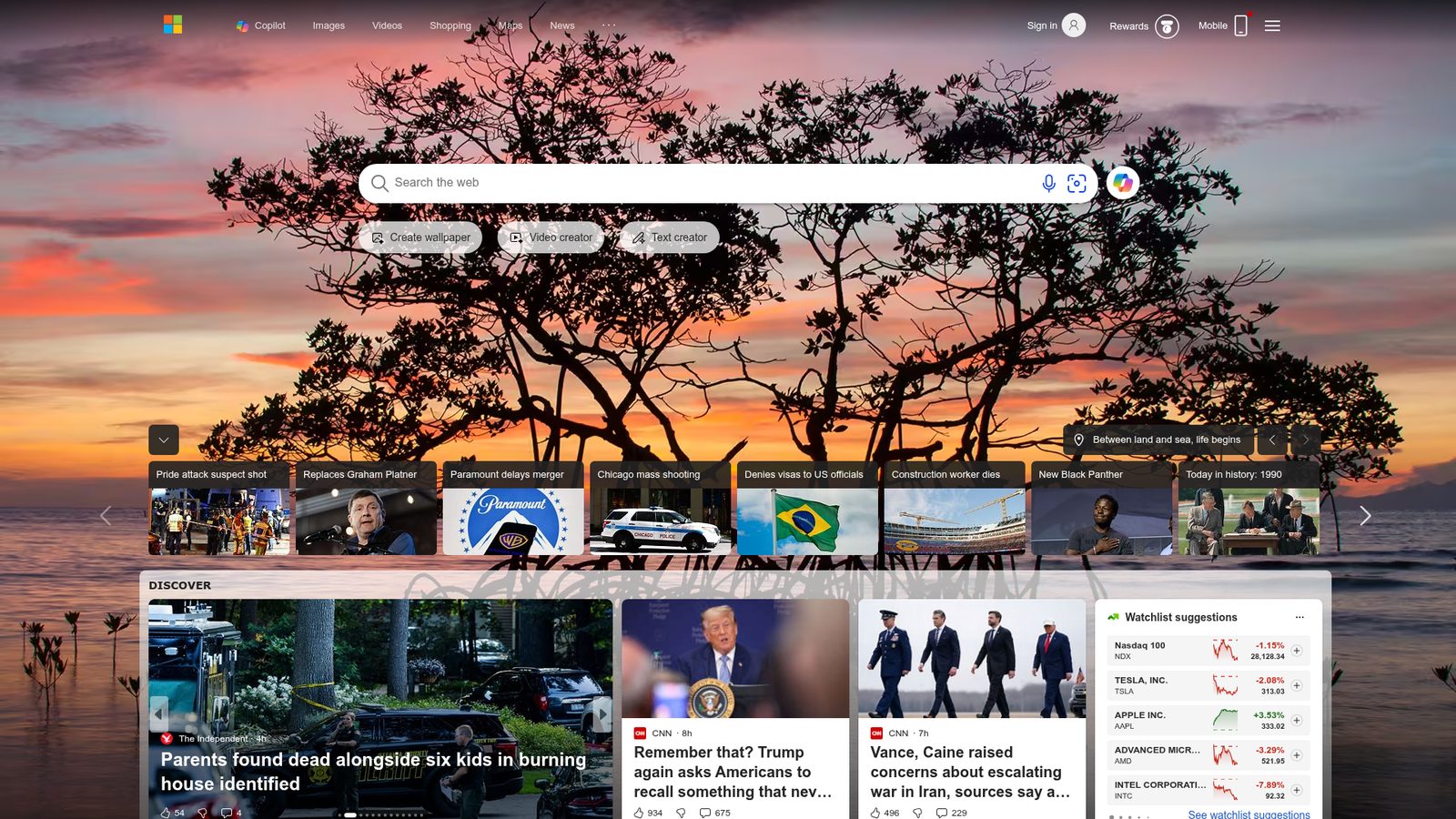
Where it wins: Feature breadth. Bing integrates image, video, news, and shopping search within a single interface, operates its own independent index, and adds Copilot AI integration for conversational follow-up questions. For mainstream users who want Google-level features without switching ecosystems entirely, Bing is the most direct comparison.
Highlights
- Independent search index with a distinct ranking algorithm, not reliant on third-party results
- Integrated image, video, news, and shopping search in one interface
- Visual Search for image-based queries and object identification
- AI-powered Copilot integration for conversational search and content creation tools
Key Features
- Bing Rewards program: earn points for searches, redeemable for Microsoft products and gift cards
- Copilot AI chat integration for follow-up questions and summarization
- Visual Search for reverse image lookup and object identification
- Ranked #2 globally among search engines; included in all major 2025 comparison lists
Pros
- Competitive result quality for shopping, visual, and general queries
- Full feature parity with Google's ecosystem integration
- Actively developed with significant Microsoft investment behind it
Pricing/Value
- Free, ad-supported search engine
- No premium subscription or pricing tiers are available from the official site
Who Should Choose This
Bing is the practical choice for Windows users and anyone who wants a mainstream alternative with equivalent features to Google. Note that Bing collects search data for ad targeting, similar to Google. Privacy is not the primary differentiator here. Visit Microsoft Bing to test result quality against your typical query types.
5. Ecosia
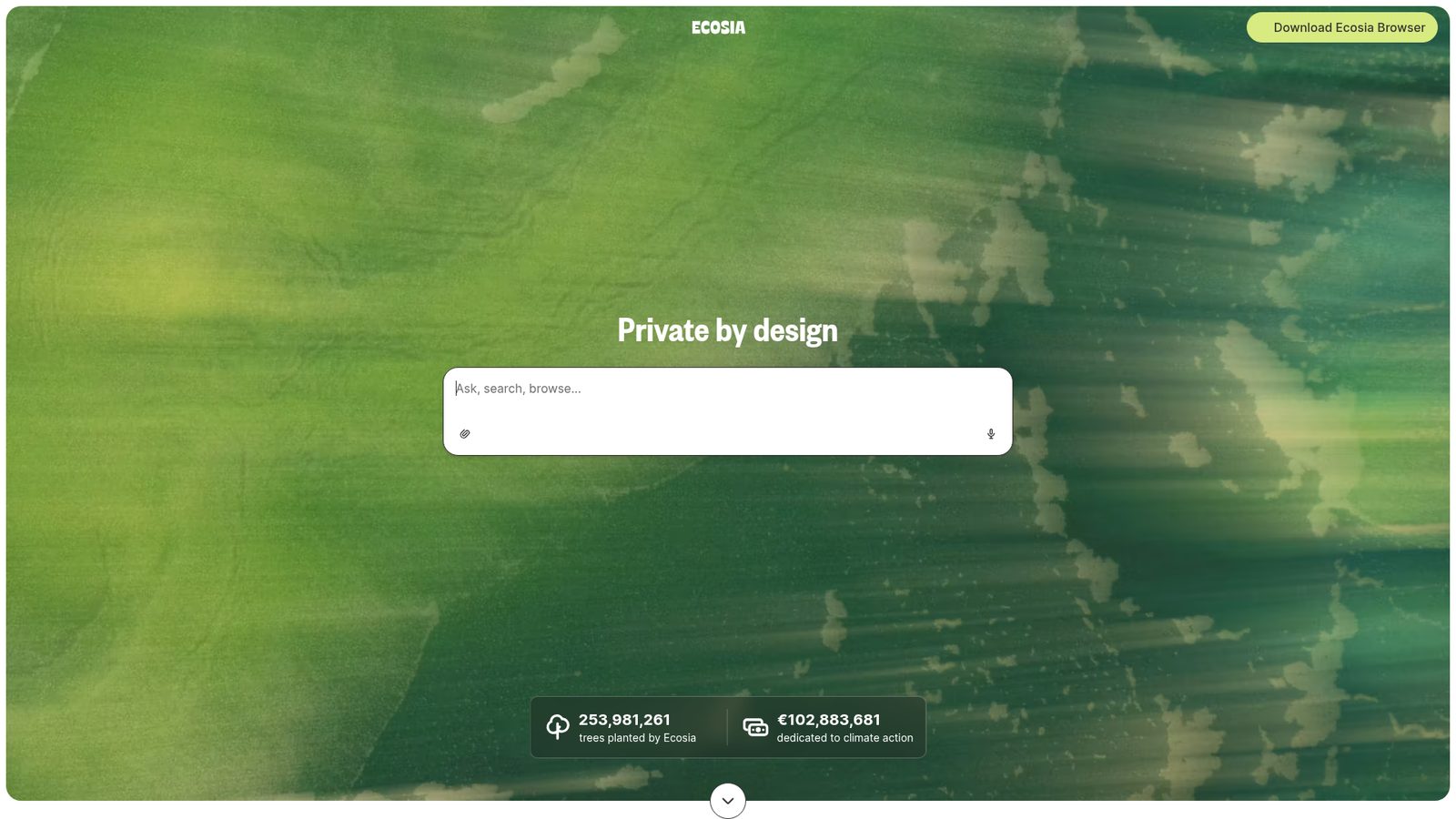
Choose this when your search engine choice is also a values statement. Ecosia is a metasearch engine powered by Bing's index that directs 100% of its profits to climate action and tree-planting projects. With 253.8 million trees planted across 35+ countries and 900+ native species, the environmental impact is quantified and publicly reported, not just claimed.
Highlights
- Metasearch model uses Bing's index while maintaining a privacy layer
- Transparent monthly financial reporting showing revenue allocation and climate spending
- 253.8M+ trees planted across 35+ countries and 900+ native species as of 2026
- Privacy-focused data collection policy: collects only data necessary for product delivery
- Claims energy-positive operations (generates more renewable energy than it consumes)
Key Features
- Monthly financial reports published publicly, showing income and tree-planting expenditure
- 20 million active users; sustainable funding model through search revenue
- Available on web, iOS, Android, and browser extensions
- Official site states: "100% of profits for the planet"
Pros
- Environmental impact is quantified and verifiable through monthly public reports
- Privacy-first positioning with minimal data collection
- Bing-powered results deliver competitive quality for general queries
Cons
- Non-essential third-party cookies from search partners are included in the cookie policy, which reduces the privacy differentiation versus Startpage or Brave Search
- Energy-positive and privacy claims lack independent third-party audit
- Result quality is tied to Bing's index, not a differentiated algorithm
Pricing/Value
- Free service; no pricing tiers documented
Best Fit
Ecosia works best for users who want their daily search activity to contribute to measurable environmental outcomes. The privacy layer is real, but not as strict as Brave Search or DuckDuckGo. Visit Ecosia to see the live tree-planting counter and current monthly financial report.
6. Mojeek
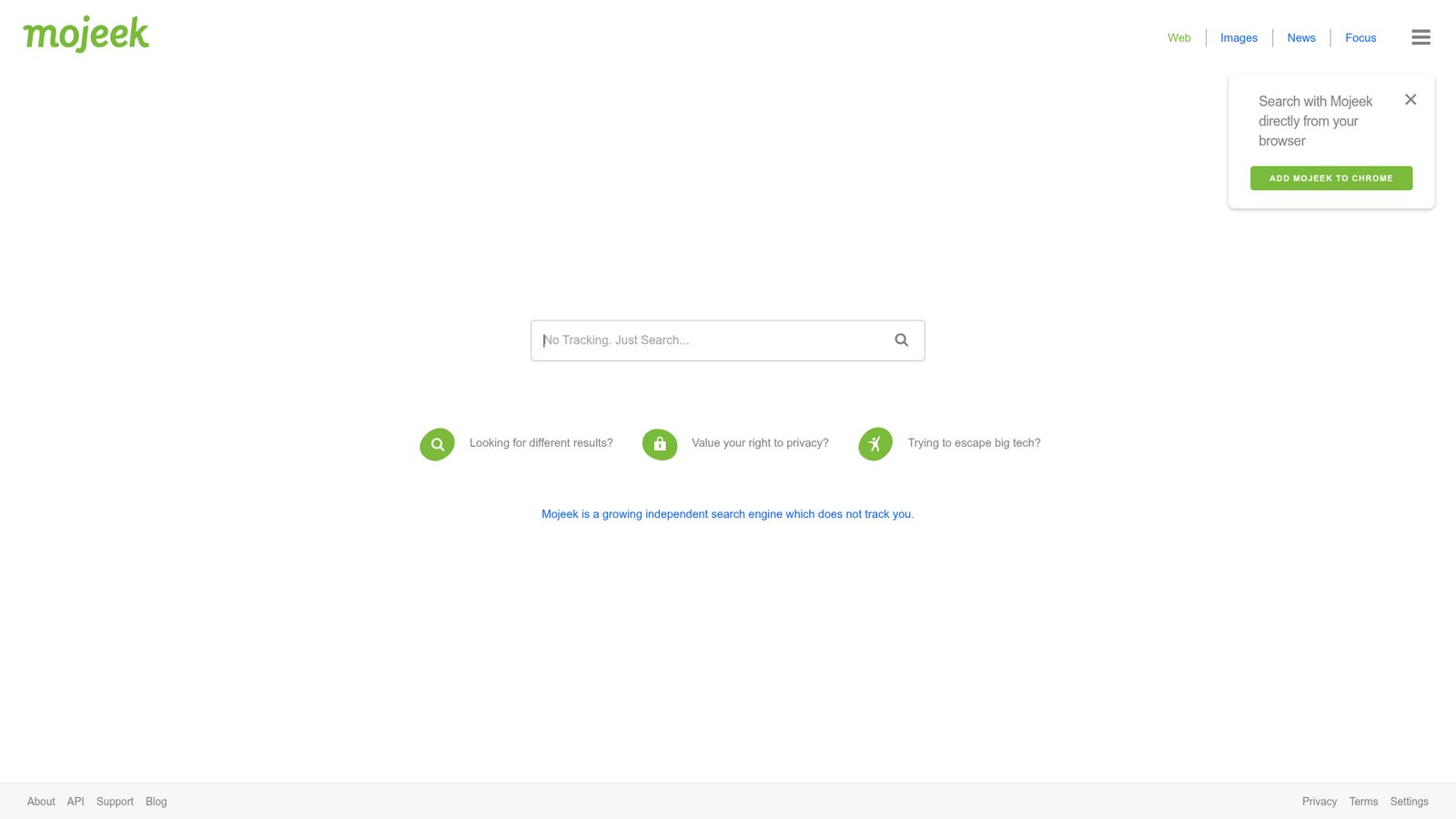
Why it ranks here: Mojeek is one of only a handful of search engines globally that operates a fully independent crawler and index without any reliance on Google, Bing, or any major tech platform. ZDNet explicitly designates it "best for an independent search engine" in its 2024 alternatives roundup, and PCMag includes it in the same year's tested list.
Highlights
- Fully independent crawler and index, with no dependence on Google or Bing infrastructure
- No-tracking privacy model built into the architecture, not added as a layer
- ZDNet names Mojeek "best for an independent search engine" in 2024
- Chrome browser extension available for convenient default search integration
Key Features
- No query logging, no IP tracking, no user profiling
- Independent from Big Tech search infrastructure at the index level
- Ad-supported model uses contextual ads based on keywords, not user profiles
- Chrome extension documented on official support pages
Pros
- True independence from Google and Bing at the infrastructure level
- No-tracking model is architectural, not just policy-based
- Free service with no pricing tiers
Cons
- Index size is smaller than Google's, Bing's, or DuckDuckGo's; niche or long-tail queries may return fewer results
- Lower mainstream awareness than top-tier alternatives; limited SERP presence in independent comparisons
Pricing/Value
- Free service; no pricing tiers documented
Who Should Choose This
Mojeek is the right choice for users who want genuine independence from Big Tech search infrastructure and are willing to accept a smaller index in exchange. For general queries it performs well; for highly specialized or niche searches, a fallback engine may be necessary. Visit Mojeek to run your typical queries and assess result coverage directly.
7. Yahoo Search
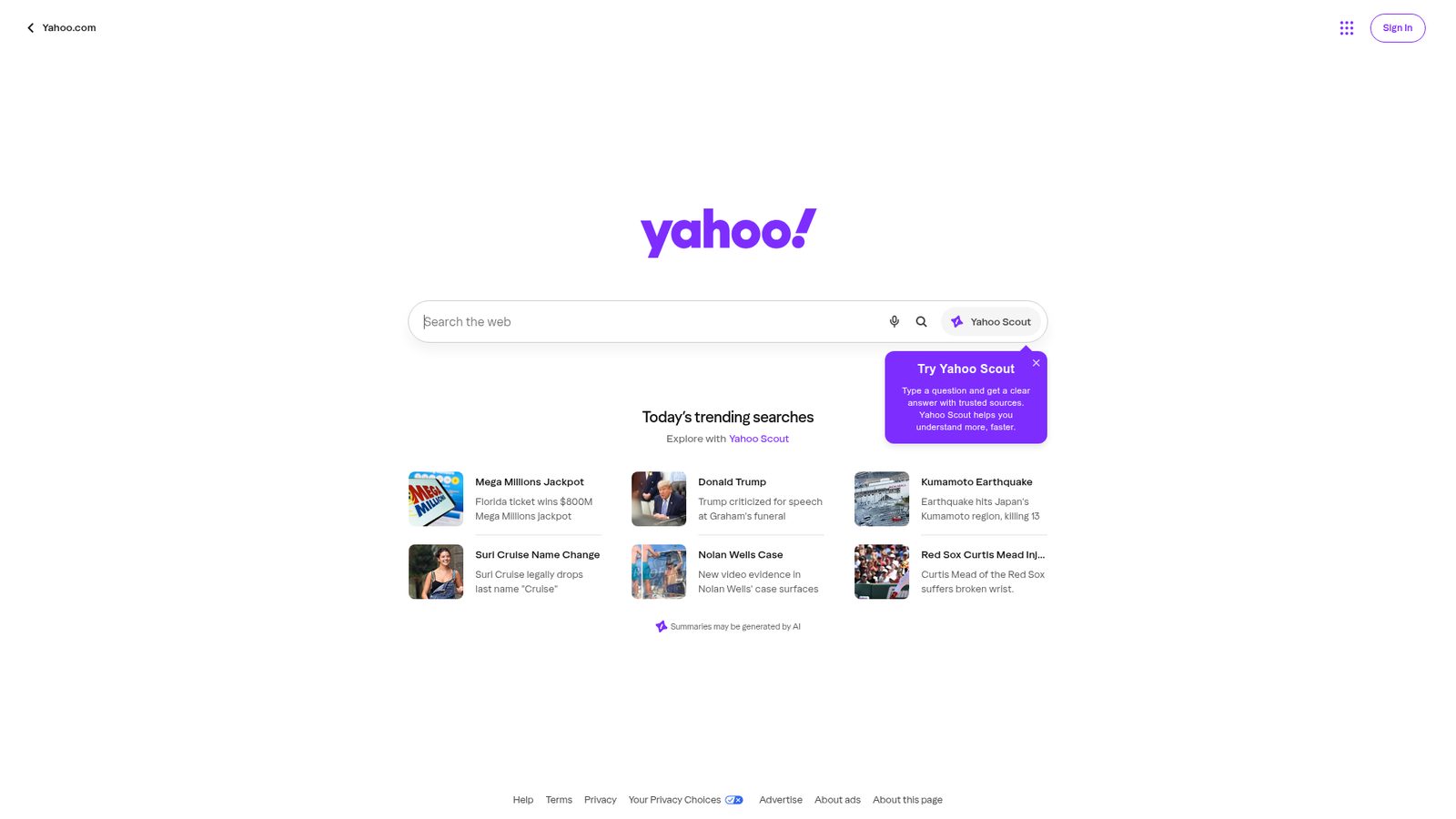
Where it wins: ecosystem integration and brand familiarity. Yahoo Search combines news, finance, shopping, and weather directly in the search interface, reducing the need to navigate between separate tools. Powered by Bing's index through a longstanding partnership, result quality is competitive for general and shopping queries.
Highlights
- Integrated news, finance, shopping, and weather features within the search interface
- Bing-powered index (partnership model) rather than pure metasearch
- Established mainstream brand with decades of operational history
- Ranked #4 in AndroidPolice's best alternatives list and #8 in SearchEngineJournal's guide
Key Features
- Yahoo Scout AI-powered question answering feature integrated into search
- Personalization options for news feeds and search results based on interests
- Web and mobile-optimized interface; no dedicated standalone app required
- Trending search topics and editorial content integrated on homepage
Pros
- Familiar interface reduces switching friction for long-time Yahoo users
- Strong ecosystem integration for users who want news and finance alongside search
- Bing-powered index delivers competitive result quality
Cons
- Privacy is not a differentiator; search data is collected for ad targeting, similar to Google
- Ad density is higher than privacy-focused alternatives; sponsored results are prominent
- Feature differentiation centers on ecosystem integration rather than search result quality or index breadth
Pricing/Value
- Free, ad-supported service
Best Fit
Yahoo Search suits users who want a familiar, feature-integrated search experience without privacy being a concern. It is not a meaningful upgrade from Google on privacy grounds. Visit Yahoo Search if ecosystem integration and brand familiarity are your primary criteria.
8. Qwant
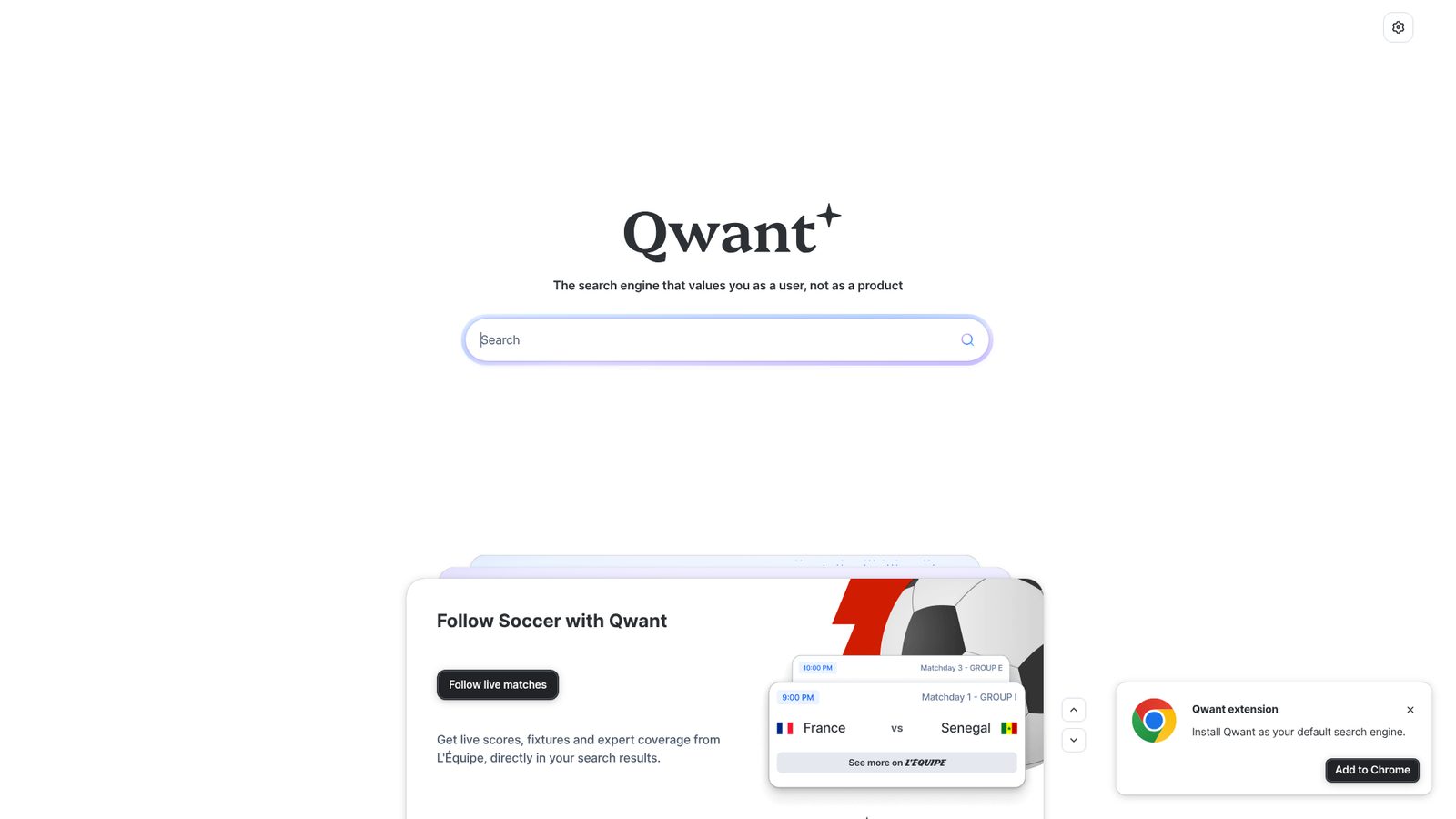
Choose this when EU data residency and GDPR compliance are non-negotiable requirements. Qwant is a French search engine hosted on European servers, explicitly positioning itself around no-log and no-data-sale claims. PCMag included Qwant in its 2024 tested alternatives list, making it one of the few European engines with mainstream editorial recognition.
Highlights
- EU-based hosting and GDPR compliance positioning; French origin and European server infrastructure
- Explicit no-log and no-data-sale claims on the official site
- Flash Answers feature for direct answer extraction from web pages
- Mobile apps available on iOS and Android
Key Features
- GDPR-compliant privacy policy with published no-log claims
- Flash Answers for common query types (similar to featured snippets)
- Available on web, iOS app, Android app
- No personal data sold to third parties per stated policy
Pros
- EU data residency addresses specific regulatory concerns for European users
- No-log and no-data-sale claims are clearly stated on the official site
- Mobile apps provide full cross-platform coverage
Cons
- Privacy claims lack independent third-party audit or verification
- Search result quality and index coverage are not benchmarked in independent reviews
- Lower mainstream visibility than top-tier alternatives;
Tier 2 SERP presence
Pricing/Value
- Free service; no pricing tiers
Who Should Choose This
Qwant is the most appropriate choice for EU-based users who need a GDPR-compliant alternative with European data residency. For users outside the EU, DuckDuckGo or Brave Search offer stronger mainstream recognition and more documented privacy practices. Visit Qwant to verify its current privacy policy and data handling claims directly.
How to Choose the Right Google Alternative
What's your primary reason for switching?
The decision framework starts with a single question. If tracking and data collection are your concern, DuckDuckGo, Brave Search, or Startpage address it directly. If you want feature parity with Google and privacy is secondary, Bing or Yahoo are the practical choices.
If independence from Big Tech infrastructure matters more than index size, Mojeek is the only option on this list that delivers it. If environmental alignment is the goal, Ecosia is purpose-built for that use case.
Metasearch vs. independent index: which matters for you?
Startpage and Ecosia are metasearch engines: they query Google's or Bing's index on your behalf and add a privacy layer. You get familiar result quality, but you're still dependent on those underlying indexes. DuckDuckGo, Brave Search, and Mojeek operate their own crawlers to varying degrees, offering more independence from Big Tech ranking decisions. The practical difference is most visible on niche or long-tail queries, where independent indexes may return different (sometimes fewer) results.
Privacy claims require your own verification
Every engine on this list makes privacy claims. None of them have independently audited third-party certifications referenced in current editorial evidence. Read the published privacy policy of any engine you commit to, and look for transparency reports or external audits. Most of these alternatives are meaningfully more private than Google, but "no tracking" as a marketing phrase and "no tracking" as a verified technical commitment are different things.
Consider a hybrid approach
Browser search shortcuts make it practical to use different engines for different query types. DuckDuckGo for general queries, Bing for shopping or visual search, Mojeek for niche content where you want Big Tech-independent results. You don't have to commit to a single engine.
Budget reality
Every alternative on this list is free. The decision is not financial; it's about result quality, privacy posture, and feature fit for your query patterns.
Frequently Asked Questions
Is it safe to switch away from Google? What about result quality?
Switching is completely reversible and takes about 30 seconds to undo in your browser settings. Result quality varies by query type: DuckDuckGo, Bing, and Startpage are competitive with Google for general, news, and technical queries. Shopping and local search are areas where Google still has an edge over most alternatives. The practical approach is to run your 10 most common query types on a new engine for one to two weeks before making a final judgment.
Do these alternatives actually protect my privacy, or is it just marketing?
Most of them offer meaningful privacy improvements over Google, which explicitly logs queries, IP addresses, and browsing behavior for advertiser profiling. However, none of the alternatives on this list have independently audited third-party certifications in current public evidence.
Brave Search discloses collection of anonymized usage metrics by default (opt-out available). Ecosia's cookie policy includes non-essential third-party cookies from search partners. The safest approach is to read each engine's published privacy policy rather than relying on marketing language.
How do these search engines make money if they don't track users?
Most use contextual advertising: ads are matched to the keywords in your current search query, not to a profile built from your browsing history. DuckDuckGo, Startpage, and Mojeek all use this model. Ecosia generates revenue through Bing-powered contextual ads and directs profits to tree-planting.
Bing and Yahoo use behavioral ad targeting similar to Google. Brave Browser (separate from Brave Search) has an optional privacy-preserving ad model and premium features.
Can I use these alternatives on mobile, or are they desktop-only?
All eight alternatives on this list offer mobile access. DuckDuckGo, Brave Search, Startpage, Ecosia, and Qwant have dedicated iOS and Android apps. Bing and Yahoo have full mobile-optimized web experiences and apps. Mojeek is accessible via mobile browser, with a Chrome extension for desktop. None of these are desktop-only.
What's the difference between a metasearch engine and an independent index?
A metasearch engine (Startpage, Ecosia) queries an existing index (Google's or Bing's) on your behalf, adding a privacy layer but not generating its own results. An independent index engine (Brave Search, Mojeek, Bing, DuckDuckGo) operates its own web crawler to build and maintain its own database of web pages. Independent indexes offer more differentiation from Google's ranking priorities but require significant infrastructure investment; the trade-off is that smaller independent indexes may cover fewer pages than Google's.
The Bottom Line: Choosing Your Google Alternative
No single engine on this list replaces Google across every query type and use case. That's the honest conclusion. What they collectively offer is a set of viable, actively developed alternatives that optimize for different priorities.
For privacy-first users: Start with DuckDuckGo for the most accessible transition, then test Brave Search if index independence matters to you. Startpage is the right choice if result quality parity with Google is non-negotiable.
For mainstream feature parity: Bing is the closest functional equivalent to Google, with a full independent index, integrated features, and Copilot AI. Yahoo suits users who want ecosystem integration and brand familiarity.
For independence from Big Tech: Mojeek is the only option on this list with a fully independent index that has no reliance on Google or Bing infrastructure. Accept the smaller index as the trade-off.
For environmental alignment: Ecosia's quantified impact (253.8M+ trees planted, monthly financial reports) makes it the most transparent values-driven option.
For EU compliance: Qwant's European hosting and GDPR positioning address data residency requirements that US-based alternatives cannot.
The most practical next step: pick two or three engines that match your priorities and run them in parallel for two weeks on your actual query patterns. Search quality is subjective and query-dependent. The engine that performs best for your specific needs is the right one, regardless of where it ranks on any list.

Written by
Jussi Hyvarinen - Co-founder of ProofWrite
I built this platform to solve my own frustration with slow research and generic AI. I use it to write every article you see on this blog, including this one.
Is your site the source AI answers cite?
Check your domain against real ChatGPT and Gemini answers — free, in a minute.
Then write the researched, fact-checked content that wins the citations you're missing.
Your Pilot starts when you generate your first article. No credit card required.