
Manual prospecting, list-building, and outreach personalization consume 60–70% of a link builder's working hours. That leaves little time for the relationship strategy that actually closes high-value placements. AI tools change that equation by automating repetitive discovery work, personalizing outreach at scale, and keeping follow-up sequences on track without constant manual intervention.
This guide evaluates nine AI-powered tools across three core workflows: prospect discovery, outreach automation, actual writing and relationship management. Each pick is assessed on how directly it addresses link-building bottlenecks and how central AI is to the actual value delivered, not just the marketing copy. Whether you run a solo operation or manage campaigns for multiple clients, the goal is to help you identify which tools belong in your stack and which solve problems you don't actually have.
Quick Picks
- ProofWrite: Best for creating editor-ready guest posts with AI through research-first writing, natural link placement, and workflows built specifically for link builders and SEO agencies.
- Semrush Link Building Tool: Best for link builders already using Semrush for SEO auditing who want prospect discovery without switching platforms.
- Guest Post Finder Pro: Best for finding guest post opportunities directly in Google search results, helping link builders discover relevant prospects faster without leaving the search page.
- Respona: Best for teams seeking fully managed, pay-per-placement link acquisition with no campaign setup overhead.
- Pitchbox: Best for outreach teams that want dedicated AI features (personalization, template generation, reply handling) with transparent pricing.
- BuzzStream: Best for agencies managing multiple campaigns who need CRM-style relationship tracking alongside outreach automation.
- Hunter: Best for small teams and solo link builders who need affordable, verified email discovery as a foundational prospecting layer.
- LinkDR: Best for in-house SEOs seeking a plug-and-play AI link builder without heavy technical setup.
- HARO: Best for link builders who want free, editorial-grade link opportunities from journalists actively seeking expert sources.
1. Guest Post Finder Pro
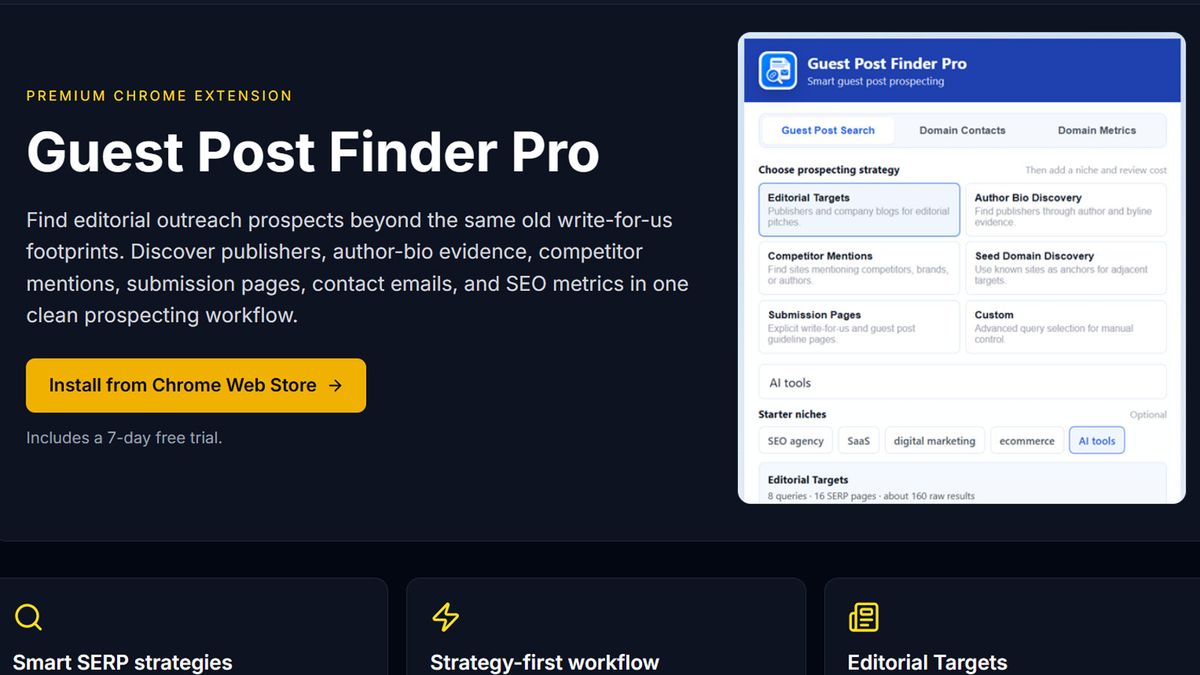
Best for link builders who want focused prospect discovery instead of a broad SEO suite or static guest-post database. Guest Post Finder Pro runs as a Chrome extension, uses the user’s own Apify token for Google SERP scraping, and is built around finding outreach-ready publishers, editorial targets, author-bio evidence, competitor mentions, and submission pages.
Highlights
- Strategy-first discovery with Editorial Targets, Author Bio Discovery, Seed Domain Discovery, Competitor Mentions, Submission Pages, and Custom modes
- Finds more than public “write for us” pages by treating SERP results as evidence for editorial outreach opportunities
- Enriches qualified prospects with emails, contact forms, submission URLs, Ahrefs DR, optional traffic/backlink metrics, and export-ready outreach fields
Key Features
- Google SERP discovery through Apify Google Search Scraper using the user’s own Apify account
- Same-day SERP cache and Apify run reuse to avoid repeating paid searches
- Domain Contacts tool for enriching pasted domain lists without consuming SERP trial quota
- Domain Metrics tool for checking up to 100 pasted domains, URLs, or emails for DR, traffic, traffic value, backlinks, and linking websites
- CSV export, Sheets-ready TSV copy, and optional webhook export for Zapier/Make workflows
Pros
- Purpose-built for guest post and editorial outreach prospecting, not a generic SEO platform add-on
- Strong filtering against list posts, directories, marketplaces, platform noise, and weak guest-post articles
- Cost-aware workflow with run previews, SERP caps, metric toggles, caching, and Ahrefs enrichment only after prospects are qualified
- Local-first setup: Apify token and prospect data are stored in Chrome local storage
Cons
- Requires a separate Apify account and Apify credits for Google SERP scraping and optional Ahrefs metric runs
- Not a full outreach CRM: no built-in email sending, inbox sync, sequencing, or AI personalization workflow
- Chrome-extension workflow may be less suitable for large teams needing shared campaigns and permissions
- SERP search is capped at 60 pages per run, and pasted-list tools are capped at 100 domains per run
Pricing/Value
- 7-day free trial
- Checkout UI in the extension shows €29/month or €249/year
- Apify usage is separate and paid through the user’s own Apify account
- Optional Ahrefs metric modes are cost-aware: lower-cost mode and faster higher-cost mode are selectable in settings
Best Fit
Link builders, SEO consultants, and agencies who want fresh SERP-based prospect discovery, contact enrichment, SEO metrics, and spreadsheet/webhook export without adopting a full outreach platform. Not the right fit if you need campaign sequencing, mailbox automation, or a shared team CRM.
Try Guest Post Finder for free
2. ProofWrite
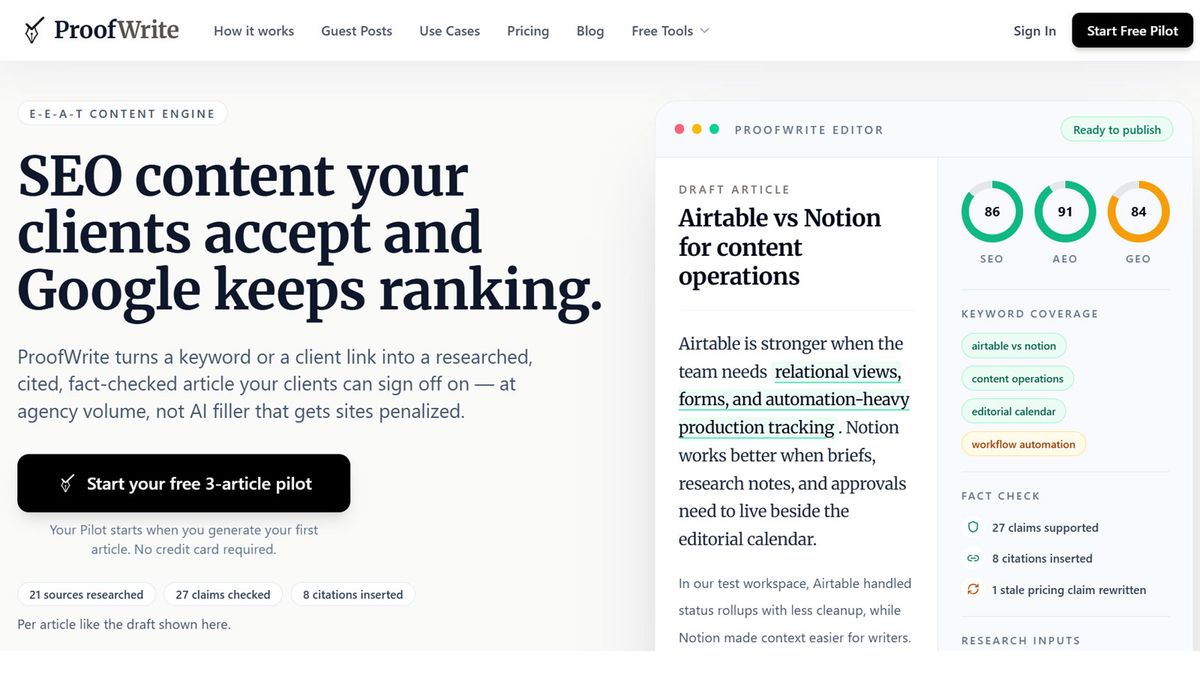
Best for link builders who need to turn guest post placements into publish-ready articles quickly. ProofWrite is not a prospecting or outreach platform; it fits the content side of link building, especially when you already have a target URL, anchor text, and guest post topic but need a well-researched draft that sounds credible to editors.
Highlights
- Built-in guest post workflow for adding required links, anchor text, URLs, and placement notes
- Research-backed drafting helps avoid thin, generic guest posts that editors are likely to reject
- Fact check, internal source handling, SEO scoring, and export/publishing options support final QA before submission
Key Features
- Guest post article generation with required anchor text and URL inputs
- Optional guest post research mode that collects sources before drafting
- AI instructions for editorial requirements, outline preferences, and link placement guidance
- Fact check workflow for reviewing claims before sending the article to a publisher
- Export options including markdown and HTML, plus WordPress publishing on Pro and Business plans
Pros
- Strong fit for link builders who need credible guest post content, not just outreach lists
- Helps weave client links into articles with more context than basic AI writers
- Research mode supports more editor-friendly drafts with sourced claims and topical depth
- Useful for agencies producing guest posts across multiple clients, sites, or niches
Cons
- Not designed for prospect discovery, email outreach, inbox management, or campaign sequencing
- You still need to source placements and manage publisher relationships elsewhere
- Best results require clear anchor text, target URL, guest post topic, and editorial notes
Pricing/Value
- Pilot: free, includes 3 total articles and 10 keyword research runs
- Starter: $49/month, 10 articles/month, 50 keyword research runs, 1 domain, 1 seat
- Pro: $139/month, 30 articles/month, 150 keyword research runs, 3 domains, 3 seats, WordPress publishing
- Business: $349/month, 80 articles/month, 400 keyword research runs, 10 domains, unlimited seats
Best Fit
Link builders, guest post agencies, and SEO teams that already have placements or target links and need to produce higher-quality guest post drafts at scale. Not the right choice if you mainly need prospect discovery, outreach automation, or backlink monitoring.
3. Semrush Link Building Tool
Best for link builders already embedded in the Semrush ecosystem. If you use Semrush for keyword research, backlink audits, and competitor analysis, the link-building module extends that same data into prospect discovery without requiring a separate tool. The strength here is consolidation, not specialization.
Highlights
- Integrated with Semrush's backlink database, competitor research tools, and keyword data for cross-workflow efficiency
- Accessible through existing Semrush subscriptions with no separate pricing for the link-building module
- Enables prospect discovery using competitor backlink gaps and broken link identification
Key Features
- Cross-referenced prospect discovery using Semrush's backlink and competitor data
- Link opportunity identification within a broader SEO platform workflow
- Tiered access through existing Semrush subscription plans
Pros
- No additional cost if you're already a Semrush subscriber
- Prospect data draws from the same database you use for SEO auditing, reducing context-switching
- Suitable for link builders who want discovery integrated with rank tracking and site audit workflows
Cons
- Link building is a module within a general SEO platform, not a dedicated outreach tool
- Outreach automation and personalization are not primary features of this module
- AI-specific capabilities within the link-building tool are not clearly documented from available sources
Pricing/Value
- Pro: $20/month (up to 5 websites)
- Guru: $249.95/month (up to 15 websites)
- Business: $45/month (up to 40 websites)
- Link building tool is included in all tiers; no separate pricing applies
Best Fit
Link builders and SEO managers who already run Semrush for technical SEO and want to pull prospect discovery into the same platform. Not the right choice if you need dedicated outreach automation, AI personalization, or campaign sequencing.
4. Respona
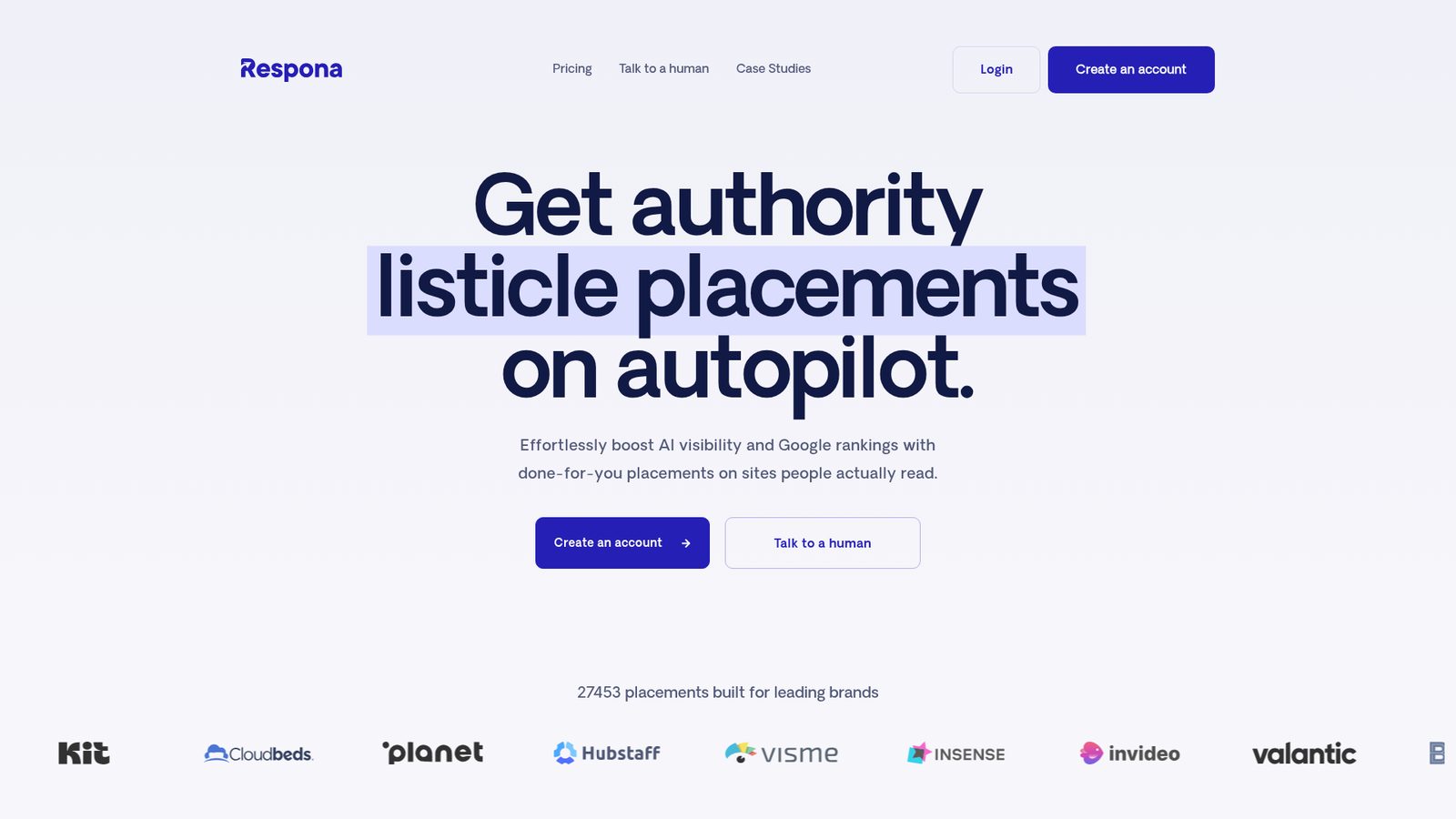
Why it ranks here: Respona solves a different problem than most outreach tools. Instead of giving you software to run campaigns yourself, Respona handles the entire workflow for you. You specify target keywords or topics, and Respona's AI-augmented team manages prospect identification, outreach personalization, and link acquisition. You pay only for confirmed placements.
Highlights
- Fully managed workflow: no campaign setup, no learning curve, no outreach management required
- Pay-per-result pricing aligns cost directly with outcome rather than charging a monthly subscription regardless of results
Key Features
- AI-driven prospect targeting and outreach personalization managed by Respona's team
- Pay-per-placement pricing model with tiers based on target domain authority
- Hands-off execution suited to teams without dedicated link-building staff
Pros
- Zero setup overhead: no integrations to configure, no templates to write, no sequences to manage
- Financial risk is limited to confirmed placements; you're not paying for outreach attempts that don't convert
- Established adoption among mid-market and enterprise SaaS brands
Cons
- Per-placement cost ($100–$500 depending on domain authority) makes high-volume campaigns expensive
- AI mechanisms and personalization depth are not publicly detailed; outcome quality relies on trust in Respona's process
- Primary positioning centers on branded web mentions and AI search visibility; fit for niche or vertical-specific link prospecting is unclear
Pricing/Value
- Starter: $100/placement Standard: $160/placement Authority: $240/placement Power: $400/placement Elite: $500/placement
- Pricing reflects domain authority of the target site; no monthly subscription or freemium tier
Best Fit
Brands and agencies that want managed link acquisition without building an in-house outreach operation. Particularly well-suited to teams where the cost of staff time exceeds the per-placement fee, or where outreach expertise is limited.
5. Pitchbox
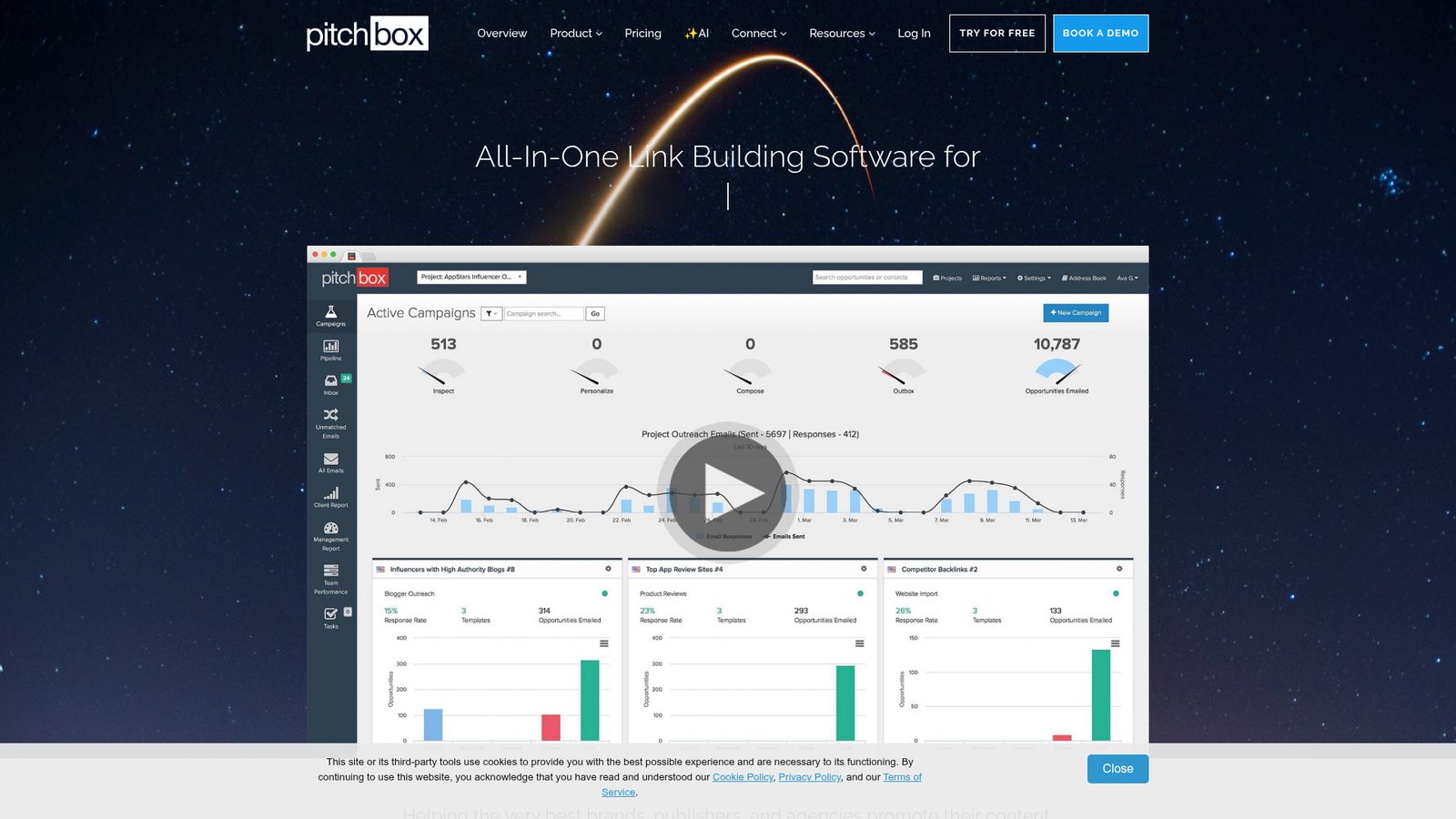
Where it wins: dedicated AI features with transparent pricing and a proven integration ecosystem. Pitchbox has invested in AI as a core product layer, not a marketing label. Its AI landing page explicitly documents three distinct capabilities: AI Personalization, AI Template Assistant, and AI Reply handling. That specificity matters when evaluating whether AI is genuinely accelerating your workflow.
Highlights
- Three distinct AI features documented on a dedicated product page: AI Personalization, AI Template Assistant, AI Reply
- Native integration with Moz, Majestic, Semrush, Ahrefs, and LRT for in-platform prospect filtering
- Automated follow-up sequencing reported to boost response rates by approximately 62% on average
- White-labeled reporting for Management, Client, and Team views supports agency workflows
Key Features
- AI Personalization customizes email copy at the prospect level without manual editing
- AI Template Assistant generates outreach templates based on campaign type and target profile
- AI Reply categorizes and suggests responses to incoming replies, reducing manual inbox management
- Integrated SEO data provider connections reduce prospecting overhead
Pros
- AI features are explicitly documented and material to the product, not surface-level additions
- Transparent, accessible pricing with a free trial available
- Endorsed by recognized link-building practitioners including Brian Dean, Neil Patel, and Matt Diggity
Cons
- Feature availability across Basic and Pro tiers is not fully detailed; verify which AI features are included at each price point
- No published ROI benchmarks or case studies quantifying time saved or cost per link acquired
Pricing/Value
- Basic: $39/month (email outreach, basic reporting)
- Pro: $79/month (advanced reporting, increased limits) Free trial available
Best Fit
Outreach teams and agencies that want dedicated AI personalization built into a mature, well-integrated platform. The free trial makes Pitchbox low-risk to evaluate, and the $39 entry point is accessible for smaller teams testing AI-assisted outreach for the first time.
6. BuzzStream
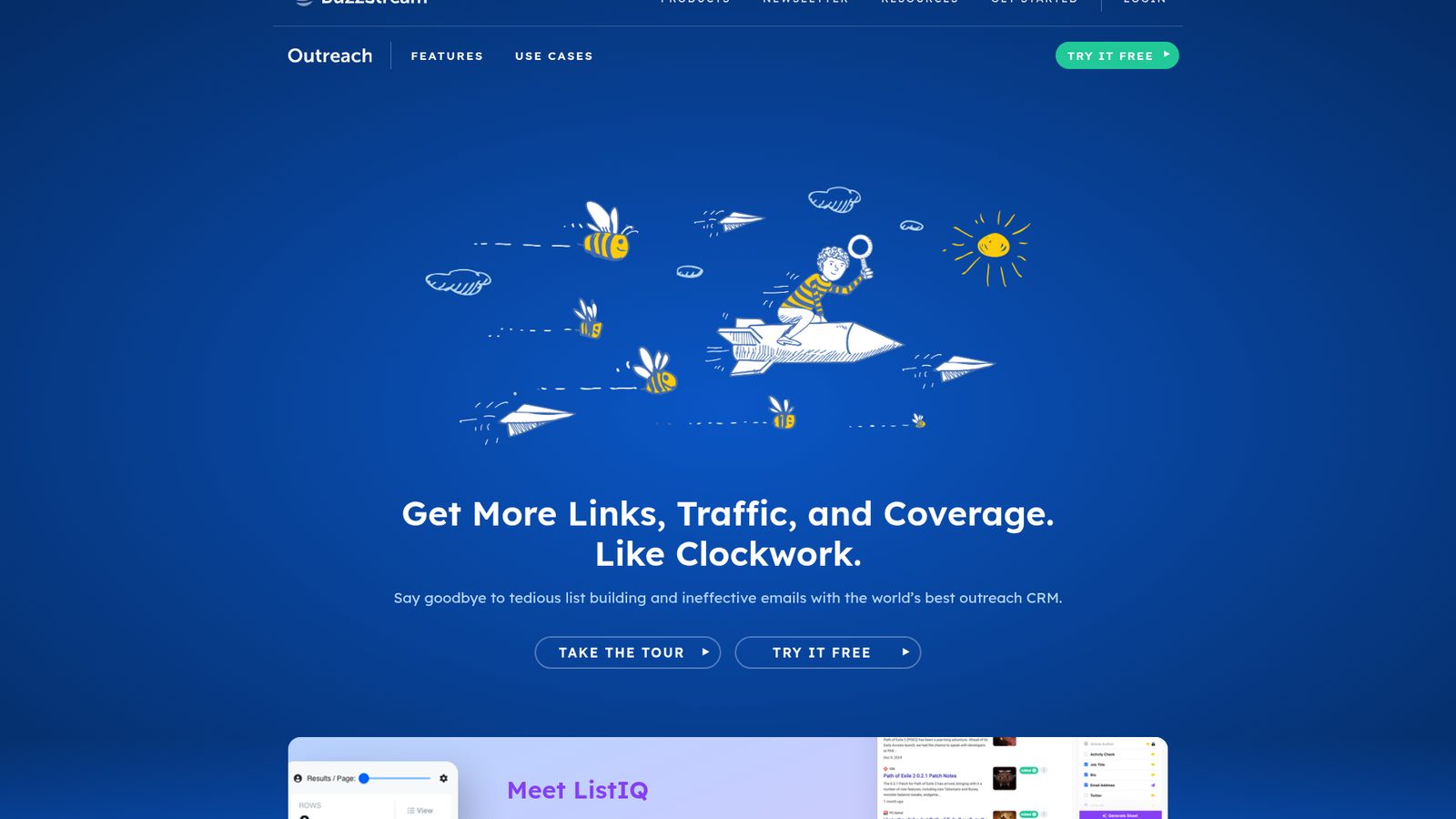
Why it ranks here: BuzzStream is the relationship layer that most outreach platforms lack. BuzzStream's strength is maintaining relationship history across campaigns. Its ListIQ feature adds AI-powered contact discovery, but the deeper value is the CRM-style tracking that keeps multi-campaign agencies organized.
Highlights
- ListIQ uses AI to discover emails and contact information for prospects, reducing manual list-building
- Full workflow coverage: research, outreach, relationship tracking, and reporting in one platform
- Named case studies from Siege Media, Rise at Seven, Seer Interactive, Verve Search, Distinctly, and others confirm active agency adoption
- Consistent SERP position 1 placement across multiple link-building tool guides
Key Features
- ListIQ AI-powered contact discovery for prospect email identification
- Outreach email automation with templating and personalization
- Relationship tracking and activity logging across campaigns
- Team collaboration features supporting multi-user agency workflows
Pros
- CRM-style relationship management distinguishes BuzzStream from pure outreach automation tools
- Established adoption among recognized link-building agencies with documented case studies
- Free trial available; user testimonials consistently cite ease of use and time savings
Cons
- AI specificity is limited to ListIQ contact discovery; the broader platform is automation and CRM-focused
- Pricing tiers and costs are not publicly disclosed; requires direct inquiry for accurate pricing
Pricing/Value
- Free trial available
- Subscription pricing is not publicly listed; contact BuzzStream for current plans
Best Fit
Agencies managing multiple concurrent link-building campaigns where relationship history and follow-up tracking are as important as initial outreach. BuzzStream is particularly strong for teams that need to coordinate across multiple account managers and maintain long-term prospect relationships.
7. Hunter
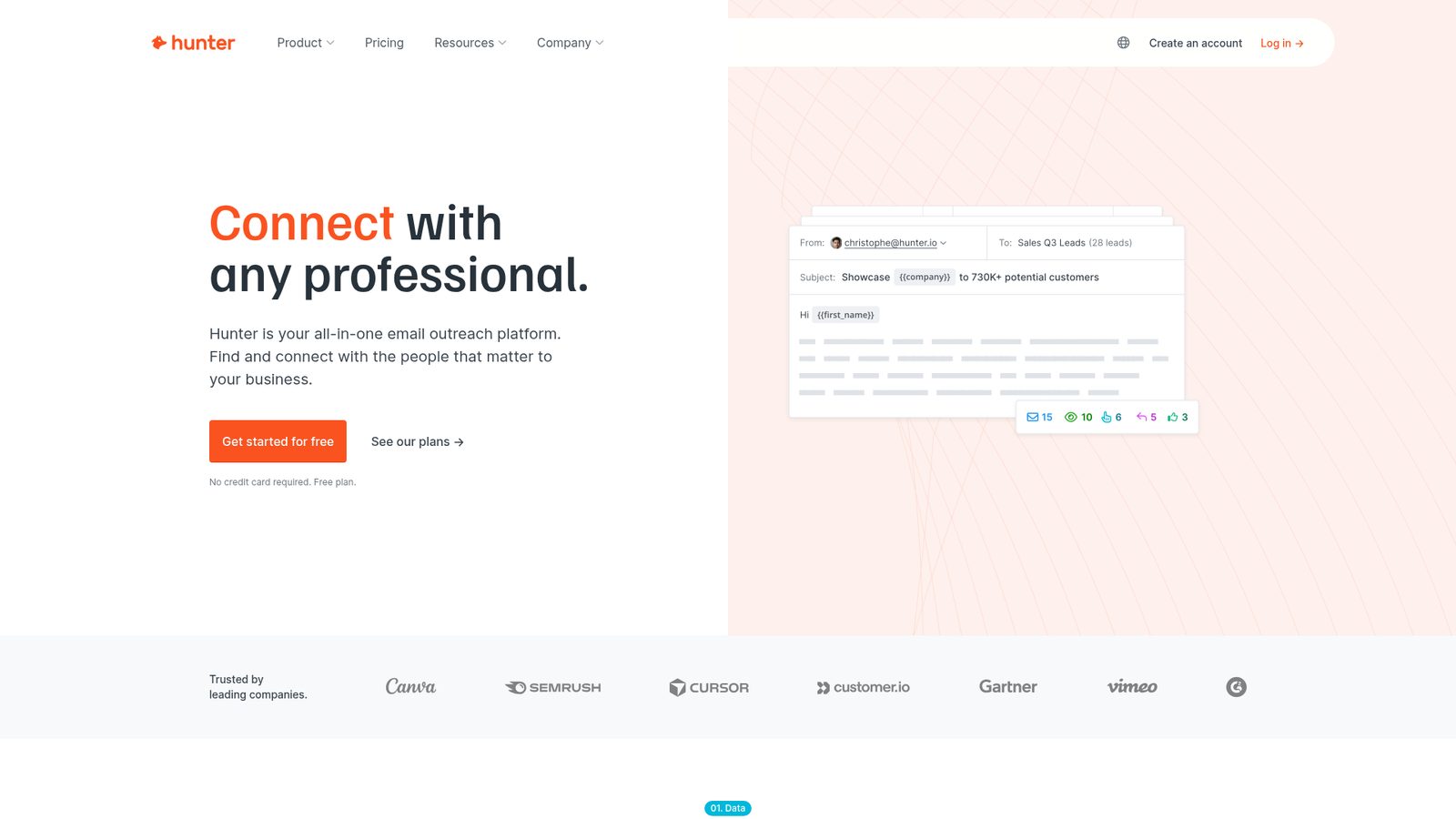
Best for small teams and solo link builders who need a reliable, affordable starting point for prospect discovery. Hunter solves one problem exceptionally well: finding and verifying professional email addresses for any domain. That specificity makes it a strong foundational layer in any link-building stack, even if it doesn't handle outreach automation itself.
Highlights
- Domain Search and Email Finder accessible without account setup for immediate prospect research
- Email Verifier reduces bounce rates and protects sender reputation during outreach campaigns
- Email Sequences module supports personalized cold email campaigns with CRM integrations and Zapier/API access to 5,000+ destinations
- 7 million+ users; rated 4.4/5 on G2 and 4.6/5 on Capterra
Key Features
- Domain Search: find all contacts associated with a company domain
- Email Finder: match a name and company to a verified email address
- Email Verifier: validate email lists before sending to prevent bounces
- Email Sequences: send personalized cold email campaigns with follow-up automation
Pros
- Free tier (50 credits/month) and Starter plan ($49/month, 2,000 credits) enable low-risk evaluation
- Email Verifier directly addresses deliverability, a common failure point in link-building outreach
- Native CRM integrations and Zapier connectivity allow Hunter to slot into existing workflows
Cons
- Single-function focus: Hunter handles discovery and verification but not outreach personalization or campaign sequencing at a sophisticated level
- AI-specific capabilities within prospect matching are not explicitly detailed in official product messaging
Pricing/Value
- Free: $0/month (50 credits/month, unlimited users)
- Starter: $49/month (2,000 credits/month)
- Growth: $149/month (10,000 credits/month)
- Scale: $299/month (25,000 credits/month)
- Enterprise: contact for pricing
- Inbox Protection and managed email accounts available as add-ons
Best Fit
Solo link builders and small teams who need accurate email discovery before scaling into a dedicated outreach platform. Hunter works well alongside Pitchbox or BuzzStream: Hunter finds and verifies contacts, the outreach platform handles sequencing and personalization.
8. LinkDR
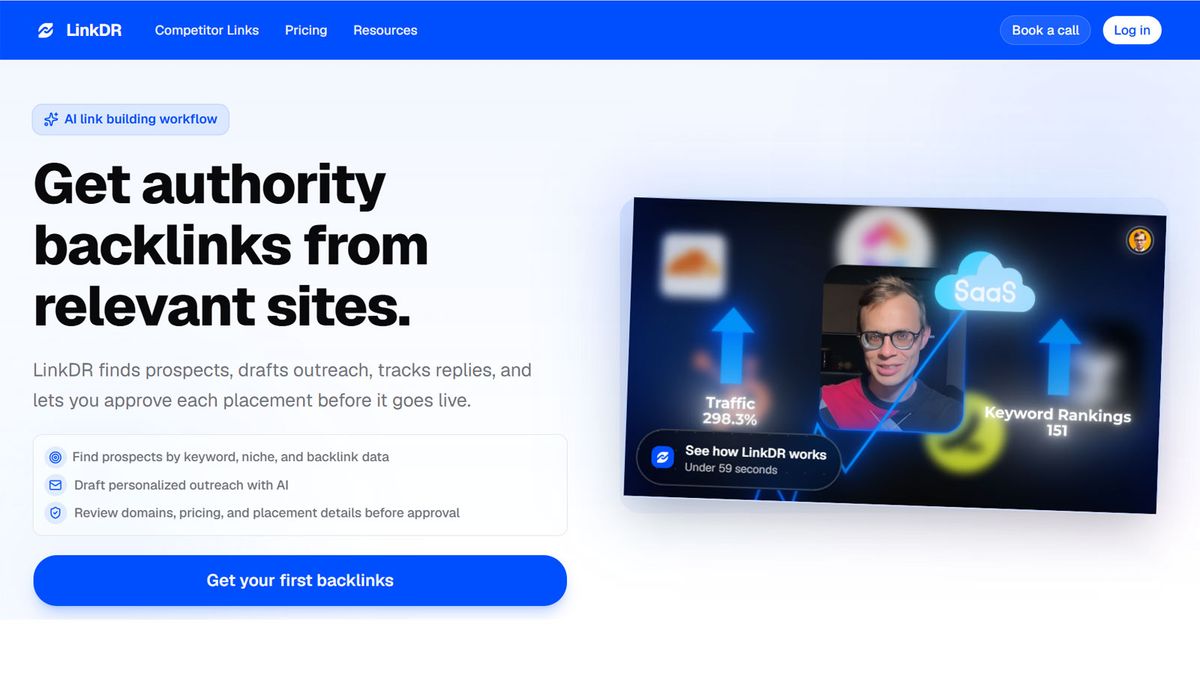
Choose this when you want an AI-first link builder with minimal setup and you're comfortable evaluating a newer platform. LinkDR is explicitly positioned as a plug-and-play AI link builder for SEOs who prioritize quality outcomes and time efficiency.
The appeal is accessibility: no heavy technical configuration, no steep learning curve.
Highlights
- AI-first architecture designed for link acquisition workflows, not a legacy tool with AI features added
- Plug-and-play positioning targets in-house link builders who need fast deployment
- Editorial recognition in a link-building tools roundup at SERP position 6
Key Features
- AI-native link-building automation covering core acquisition workflows
- Accessible setup designed for non-technical users and in-house teams
- Positioned around quality outcomes and time efficiency as dual priorities
Pros
- AI-first design rather than incremental AI additions to existing functionality
- Low setup barrier makes evaluation fast for teams with limited technical resources
Cons
- Pricing model, tiers, and trial availability are not publicly documented; direct vendor contact required
- Limited user reviews, case studies, or adoption evidence available to validate claims
- As a newer market entrant, long-term product maturity and feature stability are unproven
Pricing/Value
- Pricing not publicly available; contact LinkDR directly for current plans and trial access
Best Fit
In-house SEOs and link builders who want to test an AI-native platform without committing to a complex onboarding process. Best approached with a direct trial to evaluate AI capabilities before comparing against more established options.
9. HARO (Help a Reporter Out)
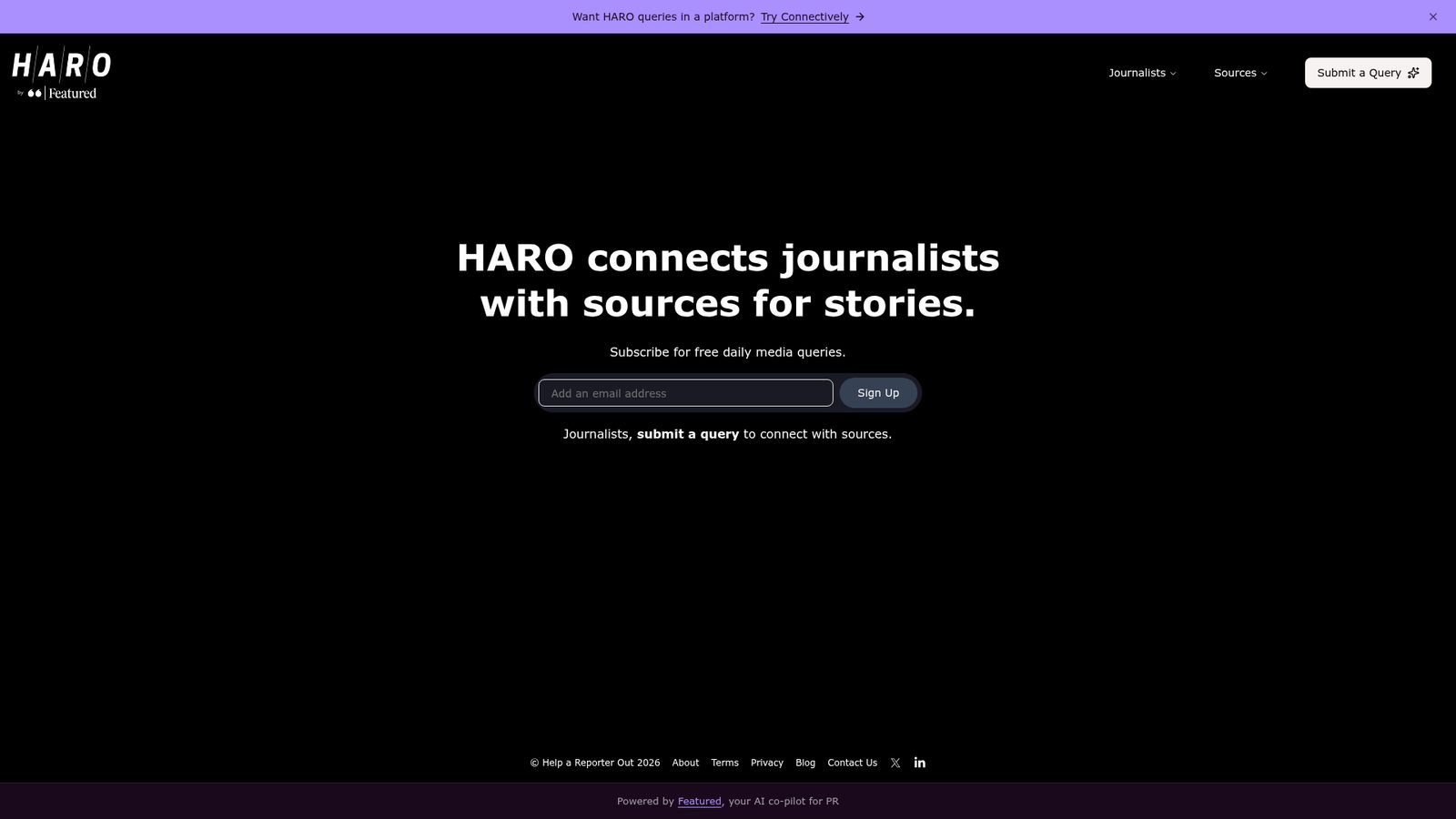
Quick verdict: HARO is not an outreach automation tool—it's a free opportunity identification service that earns you links by positioning your expertise in front of journalists. The workflow is inverted compared to traditional link building: instead of reaching out to prospects, you respond to media queries and earn placements when journalists cite your expertise.
Highlights
- Free subscription with no paywall for core link opportunity access
- Daily query digests surface journalist requests matched to user-defined expertise areas
- Addresses a specific bottleneck: identifying high-intent, editorial-grade link opportunities
- Established platform with a long operational history and consistent SERP presence
Key Features
- Daily journalist query digests organized by expertise category
- Direct connection between sources (link builders/brand experts) and journalists seeking commentary
- Free access to all core query content
Pros
- Zero cost for core functionality, making it a no-risk addition to any link-building stack
- Link opportunities come from journalists actively seeking sources, indicating high editorial intent
- Complements active outreach strategies by diversifying link sources
Cons
- Not AI-native; no AI-driven query filtering, relevance ranking, or response assistance
- Passive tool: you respond to opportunities rather than proactively targeting prospects
- Requires manual query review and pitch writing; no outreach automation or personalization features
Pricing/Value
- Free subscription; no paid tiers documented
Best Fit
Link builders and digital PR professionals who want to supplement active outreach campaigns with earned media opportunities. HARO works best alongside platforms like Pitchbox or BuzzStream, providing a passive channel for editorial links while your primary tools handle proactive prospecting.
Try HARO (Help a Reporter Out)
Building an AI-Powered Link-Building Workflow
The tools above cover different stages of the link-building process. Most effective teams don't rely on a single platform—they combine two or three tools that complement each other across the workflow.
A practical AI-powered link-building workflow looks like this:
- Find guest post opportunities using Guest Post Finder Pro, a Chrome extension that identifies guest posting targets directly from Google search results, speeding up prospecting without leaving your browser.
- Research the target website and topic using Semrush's backlink and competitor data, or Perplexity for rapid topic research.
- Create a high-quality guest post with ProofWrite, which researches the topic before writing, generates complete guest posts around your target URL and anchor text, and prioritizes editorial quality, factual accuracy, and natural link placement over generic AI output.
- Review and improve the draft before outreach, checking that the content meets the target site's editorial standards.
- Personalize outreach emails using Pitchbox's AI Template Assistant AI personalization to customize pitches at scale without sounding templated.
- Track placements and relationships in BuzzStream or Pitchbox's reporting dashboard to maintain relationship history and monitor campaign performance.
This workflow addresses every major bottleneck: opportunity discovery, content quality, outreach personalization, and relationship management.
How to Choose the Right AI Link-Building Tool
What is your primary bottleneck?
Start by identifying where your team loses the most time. If prospecting and email discovery consume most of your hours, Hunter or the Semrush Link Building Tool address that directly. If outreach personalization and follow-up sequencing are the constraint, Pitchbox is stronger fit. If relationship management across multiple campaigns is the challenge, BuzzStream's CRM-first approach is the right starting point.
What is your team size and budget?
Small teams and solo link builders should start with Hunter's free tier for prospect discovery and layer in a Pitchbox free trial for outreach automation. Both tools offer transparent pricing and low-risk evaluation paths. Agencies managing multiple client campaigns benefit from BuzzStream's team collaboration features and relationship tracking. Teams without dedicated link-building staff should evaluate Respona's pay-per-placement model, which eliminates the overhead of running campaigns in-house.
Do you need AI for content creation or just outreach?
Most tools in this guide focus on outreach automation and prospect discovery. If guest posting is a significant part of your link-building strategy, you need a separate tool for content creation. ProofWrite is designed specifically for this: it researches the topic, generates a complete guest post around your target URL and anchor text, and ensures editorial quality and factual accuracy before you submit.
How important is integration with your existing stack?
Pitchbox integrates with Moz, Majestic, Semrush, Ahrefs, and LRT for in-platform prospect filtering. Hunter connects with 5,000+ destinations via Zapier and native CRM integrations. BuzzStream supports team collaboration across multi-user agencies. If your stack already includes specific SEO data providers or CRMs, verify integration compatibility before committing to a subscription.
Should you start with a managed service or self-serve software?
Self-serve tools (Pitchbox, BuzzStream, Hunter) give you control over prospecting criteria, outreach copy, and campaign pacing. Managed services (Respona) handle execution but limit your ability to adjust targeting or messaging mid-campaign. Teams with link-building expertise benefit more from self-serve tools; teams without dedicated outreach staff may find Respona's managed model more cost-effective despite the higher per-placement price.
Frequently Asked Questions
What is the difference between AI-powered link prospecting and traditional link prospecting tools?
Traditional link prospecting tools surface lists of potential targets based on keyword filters, domain metrics, or competitor backlink data. AI-powered prospecting goes further by analyzing relevance signals, predicting prospect fit, and automating contact discovery. In practice, this means less manual filtering and faster identification of high-probability targets. Tools like Pitchbox integrate AI personalization directly into the prospecting workflow, so you move from a filtered prospect list to a personalized outreach email without switching platforms.
How much time can AI link-building tools save compared to manual outreach?
The time savings depend on which workflow stage you automate. Pitchbox reports that automated follow-up sequencing boosts response rates by approximately 62% on average, which means fewer manual follow-up emails per placement secured. Hunter eliminates manual email research by finding and verifying contact information automatically. Across a full campaign, teams using AI-powered prospecting and outreach tools typically reclaim several hours per week that would otherwise go to list-building, email research, and follow-up management.
Do AI link-building tools integrate with existing CRMs and email platforms?
Most established tools in this category offer CRM and email platform integrations. Hunter provides native CRM integrations and Zapier access to 5,000+ destinations. Pitchbox connects with major SEO data providers and email platforms. BuzzStream is built as a CRM-style platform, making it the strongest option if relationship tracking across your existing tools is a priority.
LinkDR have not publicly documented their integration ecosystems, so verify compatibility before committing.
What is the typical cost of AI link-building tools for a small agency?
Costs vary significantly by tool type and model. Self-serve software ranges from free (HARO, Hunter's free tier) to $39–$79/month for dedicated outreach platforms like Pitchbox. Hunter's Starter plan at $49/month covers 2,000 email credits, which is sufficient for most small agency prospecting volumes.
Managed services like Respona charge $100–$500 per confirmed placement, which can exceed software costs quickly at scale but eliminates the overhead of running campaigns in-house. A practical small agency stack, Hunter for discovery plus Pitchbox for outreach, runs approximately $90–$130/month before annual billing discounts.
Can AI link-building tools personalize outreach at scale without sounding robotic?
The quality of AI personalization varies by tool. Pitchbox's AI Personalization and AI Template Assistant are designed specifically to customize email copy at the prospect level, inserting relevant details that make each outreach feel tailored rather than templated.
The key is using AI personalization as a starting point and reviewing outputs before sending; most tools include a review step for this reason. Fully automated, unreviewed AI outreach tends to produce lower response rates than human-reviewed AI drafts.
Conclusion: Build Your AI-Powered Link-Building Stack
Your workflow bottleneck determines which tool to prioritize first. Outreach-first teams should evaluate Pitchbox for AI-driven personalization and sequencing; both handle prospect discovery, email customization, and follow-up in one platform. Agencies managing multiple campaigns benefit most from BuzzStream's CRM-first approach and ListIQ contact discovery.
Small teams on tight budgets should start with Hunter's free tier for prospect discovery, then layer in a Pitchbox free trial for outreach automation. Teams without dedicated link-building staff should compare Respona's per-placement model against the cost of running campaigns in-house.
For guest posting campaigns specifically, pairing Guest Post Finder Pro for opportunity discovery with ProofWrite for content creation addresses both sides of the equation: finding the right targets and producing editorial-quality posts that editors actually want to publish.
Test two or three tools with free trials before committing to annual contracts. Measure time saved per prospect and response rate improvements after the first 30 days; those two metrics will tell you whether AI is delivering real workflow value or just adding complexity to your stack.

Written by
Jussi Hyvarinen - Co-founder of ProofWrite
I built this platform to solve my own frustration with slow research and generic AI. I use it to write every article you see on this blog, including this one.
Publish articles where every claim is checked
ProofWrite researches and writes articles and checks every factual claim against its sources.
Try it on an article you already wrote.
Free Pilot: 1 article and 3 of your own articles. No credit card.